The effects of wildland fires on air quality
Wildfires are significant sources of air pollution, releasing large amounts of carbon monoxide, nitrogen oxides, volatile organic compounds, and particulate matter, which severely impair air quality and pose risks to human health. Exposure to wildfire smoke has been associated with increased respiratory and cardiovascular diseases, particularly among vulnerable populations. Therefore, it is crucial to provide timely information about areas affected by wildfire smoke and atmospheric pollutant concentrations to protect public health.
In recent decades, advancements in the understanding of smoke behaviour and its impacts have been achieved through modelling systems, and nowadays some numerical models can simulate fire emissions to the atmosphere, their dispersion and chemistry, as well as their effects on air quality. The main purpose of this communication is to provide an overview of the impacts of wildland fires on air quality, from emissions to concentration in the air, and to discuss associated human health concerns. This overview is based on several case studies focused on emission estimation and air quality modelling at various scales, illustrating how numerical modelling has improved understanding of wildfire smoke behaviour and supported the identification of affected populations. The presentation will also address current challenges posed by the increasing frequency and severity of wildland fires under climate change, highlighting the need for improved emission parameterizations and enhanced forecasting systems. The importance of integrating research on fire, air quality, and health to better assess and mitigate the impacts of wildland fires on air quality and society is highlighted.
Outdoor-to-Indoor Propagation of Particulate Matter During Wildfire and Dust Episodes in Naturally Ventilated Higher Education Classrooms
Indoor air quality in educational environments is strongly influenced by outdoor pollution sources, particularly in naturally ventilated buildings. This study analyses the relationship between outdoor air quality, wildfire activity, and indoor particulate matter concentrations in two naturally ventilated classrooms (O102 and B268) at the Polytechnic University of Tomar during 2025.
Daily datasets from outdoor IQAir monitoring and indoor classroom measurements were combined to evaluate the propagation of PM2.5 and PM10 from outdoor to indoor environments. Additional wildfire indicators, including fire count and burned area, were integrated to assess the influence of wildfire-related pollution episodes on indoor exposure. Statistical analyses included indoor/outdoor (I/O) ratios, correlation analysis, linear regression models, seasonal comparisons, and the evaluation of warning periods associated with wildfire and dust events.
The results demonstrate strong outdoor-to-indoor coupling for particulate matter in both classrooms, particularly for PM2.5. However, the two rooms exhibited distinct behaviours associated with their natural ventilation geometry and indoor particle dynamics. Classroom O102, directly connected to the outdoor environment through windows and door openings, showed strong correlations with outdoor concentrations but significant attenuation of PM10, suggesting efficient dilution and removal mechanisms. In contrast, classroom B268, an interior room connected through an internal corridor, presented higher PM10 indoor/outdoor ratios and greater particle persistence, indicating retention and possible resuspension processes.
Warning episodes associated with dust intrusions and wildfire activity led to substantial increases in indoor particulate matter concentrations, especially during summer. PM2.5 and PM10 concentrations on warning days were significantly higher than on regular days in both classrooms, with increases exceeding 100% in some cases at B268. Although full-year correlations between national wildfire indicators and outdoor particulate matter were relatively weak, event-based analyses suggest that wildfire activity contributed to several summer pollution episodes affecting indoor environments.
The findings highlight that proximity to outdoor pollution sources alone does not fully explain indoor exposure patterns. Instead, natural ventilation configuration, effective air exchange, room geometry, and indoor particle persistence play a crucial role in determining occupant exposure in higher education environments. The study reinforces the importance of integrating outdoor and indoor air quality assessments when developing sustainable and healthy learning spaces.
The BreathIN project at the University of Nicosia
The consolidation of three years of collaborative work aimed at advancing understanding and practice in indoor air quality and health at HEI in Europe (Portugal, Cyprus and Greece) has achieved multidisciplinary activities in the different partners’ institutions, combining educational innovation, environmental monitoring and community engagement.
In Cyprus, over the project’s duration, the consortium implemented a series of training activities, living lab exercises, and public events that highlighted the impact of indoor air quality on well-being in the HEI settings. Key initiatives included the BreathIN Symposium on indoor air quality and well-being, thematic workshops such as the “Plant Workshop – Purifying Your Indoor Air”, and a public round table on “The Air We Breathe and Public Health”, all of which strengthened links between researchers, students, professionals and the wider community.
Student involvement was essential to the project, with final year projects evaluating lighting characteristics and air quality monitoring within learning environments, and an on going evaluation on the student’s perception of indoor environmental quality.
Comfort or Challenge? Assessing Environmental Comfort Conditions in the Classroom
The selection of learning-supportive environments should be carefully considered in educational facilities to promote comfort, health, well-being, and academic performance for all occupants. Inadequate Indoor Environmental Quality (IEQ) conditions, such as insufficient ventilation and/or lighting combined with thermal instability, may compromise cognitive efficiency, creating additional challenges for the teaching–learning process.
In this context, an assessment of environmental comfort conditions was conducted in an educational building, with particular emphasis on thermal comfort, visual comfort and indoor air quality. A monitoring campaign was carried out in occupied spaces exhibiting different occupancy profiles and operational conditions. Environmental comfort was assessed based on PMV and PPD indices, as well as illuminance levels. Parameters including indoor CO? concentration, particulate matter levels, air temperature, relative humidity, illuminance, and thermographic analysis, whenever feasible, were evaluated.
The results demonstrated that CO? concentrations frequently exceeded recommended thresholds during occupancy periods, while increased ventilation rates significantly improved air quality but led to a noticeable decrease in thermal comfort levels, confirming the need for balanced ventilation strategies.
Ensuring environmental comfort in educational buildings remains a technical challenge, primarily due to fluctuating occupancy levels, ventilation strategies, and building design characteristics. Integrated IEQ monitoring is essential to support the identification of critical conditions and the implementation of sustainable, energy-efficient measures that enhance occupant comfort and academic performance.
Upgrading an Aging University Laboratory: A Pre/Post-Intervention Assessment of Indoor Environmental Quality
Indoor Environmental Quality (IEQ) strongly shapes the health, comfort, and academic performance of students and staff in higher education settings, yet university classrooms typically combine high occupant density with aging infrastructure, creating challenges for maintaining optimal indoor environments. A wide range of interventions can address these challeneges across five domains: air quality and ventilation, thermal comfort, lighting, odor, and noise. Here, we report a pre/post-intervention case study conducted in an aging (built in 2003) university laboratory at Democritus University of Thrace in Orestiada, Greece, which operates as a living lab. Five sequential interventions were implemented: (a) reorganizing the room into an open-plan layout by removing obsolete furniture, (b) enhancing natural daylight by unblocking four large windows, (c) introducing indoor plants (Dracaena trifasciata, Zamioculcas zamiifolia) for phytoremediation, (d) deploying real-time monitors for PM2.5, CO2, temperature, and relative humidity coupled with with app-based alerts, and (e) delivering educational activities to raise occupants' IEQ literacy. Intervention effectiveness was evaluated through an electronic questionnaire completed before and after implementation, covering perceived air quality, dysphoria-related symptoms, and overall environmental perception. Responses were analyzed using SPSS, with the Wilcoxon signed-rank test, and Cronbach's alpha confirming scale reliability. Perceived air quality improved significantly (p=0.002), with fewer reports of cold drafts, dust, and unpleasant odors. Specific symptoms including tiredness (p=0.045) and difficulty in concentrating (p=0.016) also declined, and overall environmental perception, covering assessments of space, seating, thermal comfort, and general satisfaction, improved significantly (p<0.001). Although the aggregate dysphoria index did not reach statistical significance (p=0.267) and the findings relied on self-reported perceptions, the results show that a coordinated, low-cost, multi-domain intervention pairing physical upgrades with occupant engagement can yield measurable IEQ gains, offering a transferable model for similar aging campus buildings across diverse climates contexts.
The air we breathe: from emissions to health impacts
Air pollution is one of the leading environmental and public health threats globally, causing millions of premature deaths and contributing to a wide range of diseases. The World Health Organization (WHO) reports that air pollution causes about 6.6 million deaths globally each year. The most affected are children, with over 675,000 deaths occurring in children under the age of 5. Long-term exposure to air pollution can lead to noncommunicable diseases (NCDs), including chronic respiratory diseases, stroke, heart disease, diabetes, lung cancer, and dementia.
The health impacts of air pollution can be assessed through a chain of events, from atmospheric emissions to air quality, exposure, and health effects. This talk presents the methods and some examples of integrated approaches that investigate and connect emission sources, air quality, population exposure, health impacts, applied to different vulnerabilities and risks.
Exposure assessment integrates environmental concentrations with population activity patterns, allowing the estimation of individual and population-level exposures. Epidemiological approaches, including concentration–response functions derived from cohort and time-series studies, provide the basis for quantifying the health impacts associated with air pollution, including premature mortality, cardiovascular and respiratory diseases, and other adverse health outcomes.
The implementation of emission reduction measures can substantially improve air quality, generating measurable public health gains and significant economic benefits. Health impact assessment methodologies, combined with economic valuation techniques and cost–benefit analyses, support evidence-based decision-making by comparing the costs of intervention with the monetary value of avoided morbidity, mortality, and healthcare expenditures.
Looking ahead, the combined challenges posed by climate change and emerging air pollutants call for more comprehensive and integrated assessment approaches. Climate change is expected to influence air pollutant emissions, dispersion, and population exposure. At the same time, increasing attention is being directed towards emerging pollutants such as black carbon and ultrafine particles, whose high toxicity and complex behaviour are not yet fully captured by current regulatory frameworks but are increasingly recognized as important contributors to adverse health outcomes. Addressing these challenges will require advances in monitoring technologies, high-resolution modelling, exposure assessment, and epidemiological research to support effective policies that deliver co-benefits for air quality, climate mitigation, public health, and sustainable development.
From Outdoors to Indoors: Nature-based Solutions in the Environment–Health Nexus
Human health and well-being are inseparable from the condition of the ecosystems that sustain us. Nature-based Solutions (NbS), defined by IUCN as actions to protect, sustainably manage, and restore natural or modified ecosystems that address societal challenges effectively and adaptively, simultaneously providing human well-being and biodiversity benefits, offer an integrative framework for acting within this Environment–Health Nexus. Human health is itself one of the societal challenges the IUCN Global Standard for Nature-based Solutions™ explicitly addresses, alongside climate change, water security, and disaster risk reduction, among others. NbS are not only a strategy for climate mitigation and adaptation but also a direct pathway to healthier, more sustainable environments, restored contact with nature, and improved physical and mental well-being.
Central to the discussion is how robust, high-integrity NbS, assessed against the IUCN Global Standard for Nature-based Solutions™ (Second Edition, 2026) and its eight criteria and 27 indicators, should be designed, implemented, and monitored across different intervention scales. This draws on the Standard's integrated systems perspective (Criterion 2), which requires that, while intervention activities may be focused at the site scale, the robustness, applicability, and responsiveness of the solution take into account the broader ecological, economic, social, and cultural systems within which it sits, and on its emphasis on sustainability and mainstreaming (Criterion 8), realised through scaling out, up, and deep. At the landscape scale, NbS such as ecological restoration and integrated catchment management help regulate air quality, temperature, and the water cycle, shaping the conditions that ultimately affect indoor conditions. At the local and urban scale, green and natural infrastructure, urban forests, and blue–green spaces mitigate pollution and heat, enhance resilience, and reconnect communities with nature. At the building scale, green roofs, living walls, and indoor vegetation extend these benefits into the spaces where people spend most of their time, improving indoor environmental quality, comfort, and occupant health. By tracing this continuum from outdoors to indoors, the presentation underscores the value of designing NbS that are evidence-based, adaptive, and Standard-aligned, applying the IUCN Global Standard as a robust framework for assessing, implementing, and monitoring scalable, high-integrity NbS that address societal challenges effectively and adaptively while simultaneously providing human well-being and biodiversity benefits.
Roundtable Discussion
Roundtable Discussion - Towards Healthier and More Sustainable Learning Spaces: Lessons from the Breath IN Project

Joana Ferreira - University of Aveiro
I have a PhD in Environmental Applied Sciences in the field of air quality and health held in 2007 at Univ. Aveiro. Since April 2021, I am an Auxiliary Researcher at Dept of Environment and Planning & CESAM, University of Aveiro. My research career started in 2001 as a PhD student (FCT fellowship) and continued as a post-doc fellow from 2009 (FCT - SFRH/BPD/40620/2007 & SFRH/BPD/100346/2014). Since 2001, I integrate the research Group of Emissions Modelling and Climate Change (GEMAC), one of the labs of CESAM (Centre for Environment and Marine Studies) Associate Laboratory, a research unit of excellence in the University of Aveiro. During 2008, I was a post doc associate researcher at the University of East Anglia (Norwich, UK). I participated in 14 national and 11 European research projects, as well as in national protocols (12) and international research networks (7), developing and applying air quality monitoring (SAUDAR project) and modelling tools (meteorological and air quality regional scale models), including source apportionment (AQMEII and FAIRMODE initiatives, EMOSAT, CLICURB, CLAIRCITY and UNaLab projects), to evaluate impacts of gaseous and particulate air pollutants on air quality and human health (INSPIRAR and MAPLIA projects, LIFE Index-Air and HERA EU project). I have focused on emission inventories and scenarios, and integrated assessment studies for policy support, air quality plans and EU policy review. These works have contributed to advance the scientific knowledge on air pollution source contribution analysis to better manage air quality and adapt to climate change in the future. The participation in research projects as team member and sub-coordinator (INSPIRAR and MAPLIA) gave me management experience and research skills to study the impact of emission reduction strategies on air quality and health including a cost-benefit analysis, were the driving force to get funding from FCT as PI of FUTURAR project. With FUTURAR, I had the opportunity to start my research independence by leading a multidisciplinary team, mentoring 2 post-doctoral fellows and 3 research fellows and supervise/co-supervising 2+1 PhD students. Regarding networking and internationalization, I should highlight the scientific and technical support to national and regional environmental and health authorities (protocols with APA, CCDRs, Dir Geral Saúde, Seixal Municipality) that extended my stakeholders network. Also, international networking has been grounded on EU project consortia, 1 month stays at BSC (Barcelona), 1 month stay at U. Macao in the scope of 2 projects, collaboration with IIASA (F.Wagner) as FUTURAR advisor, and UPB-Bilbao (PhD student mentoring in 3 months stay at UA in 2020). Moreover, I got involved in preparing or collaborating in research proposals to competitive calls (PT-FCT, EU-LIFE, EU-H2020 programs, 2 Green Deal proposals, and 1 Horizon Europe proposal - DISTENDER - as UA coordinator that was approved and is ongoing until Nov 2025. As a consequence, I was involved for a EU-LIFE proposal (under evaluation). Also, following the participation in HERA EU project, I submitted a national project (HEART) with the support of Univ Utrecht that has just been approved. Since 2010, and for 6 non-consecutive years, I collaborated voluntarily in lecturing activities of the Environmental Engineering Under graduation, MSc and PhD programs at the Univ. Aveiro. From 02/2014 to 09/2015, and in the period 02-07/2017 I was a reader (25%) of Air Pollution course at the Univ Lusófona do Porto. I supervised/co-supervised (2+7) master dissertations. My communication and publication records include 3 books, 12 chapters of books, 79 papers in international journals with above 2000 citations and a h-index of 26 (Scopus), 9 invited talks and 38 reports. As (co-)author of more than 70 communications in national and international conferences, I have 15 (Scopus) papers published in peer-reviewed conference proceedings.

Ana Isabel Miranda - University of Aveiro
Ana Isabel Miranda is a Full Professor at the University of Aveiro (UAveiro). She was Director of the Department of Environment and Planning from 2018 to 2023. She is a member of the Associated Laboratory Center for Sea and Environmental Studies (CESAM) at UAveiro, and is the coordinator of the Thematic Line Socio-Ecological Systems and Resources. With over 30 years of experience, her research spans air quality, forest fires, climate change, urban environments, nature-based solutions, and environmental effects on health. She supervised over 45 master's theses and 14 doctoral theses, which were successfully completed. She participated in 33 national research projects, coordinating 7, and in 27 European projects, serving as the national scientist responsible for 7 of them. Her research work has led to the publication of more than 650 scientific communications.

Edna Cabecinha - University of Trás-os-Montes and Alto Douro
Edna Cabecinha is an Assistant Professor at the University of Tras-os-Montes and Alto Douro (UTAD) in the Department of Biology and Environment. She completed her PhD in Environmental Sciences in 2008 (UTAD), MSc in Environmental Technology in 2002 at the University of Minho (School of Engineering), and BSc in Biophysical Engineering in 1998 at the University of Évora. She has been a member of the Centre for Research in Agro-Environmental and Biological Technologies (CITAB) since 2009, and from January 2025, she has coordinated the Thematic Group ‘R&D1: Natural Resources, Biodiversity & Climate Challenges’. Since January 2025, she has been Vice-Coordinator of the “Water Resources, Soil Health & Food” research area at the Inov4Agro Associated Laboratory (a consortium between CITAB and the Centre for Research into Sustainable Agri-Food Production (GreenUPorto) at the Faculty of Sciences, University of Porto). She is also a collaborator at the Biodiversity and Genetic Resources Research Centre (CIBIO/InBIO) in the ‘Sustainability, Ecosystems & the Environment’ Research Group in the ‘FRESHCODE - Freshwater Conservation, Diversity and Evolution’ Sub-Group. She is the Director and Member of the Academic and Executive Committee of the International Doctoral Program in Marine Science, Technology, and Management (Do*Mar) and the Vice-Director of the Doctoral College of UTAD. She was Director of the MSc in Environmental Engineering (2013-2021) and BSc in Environmental Sciences at UTAD (2013-2021). Member of the Pedagogical Council of the School of Life and Environmental Sciences at UTAD (2013-2021). She is the Lead of the Nature-based Solutions Thematic Group of the Commission on Ecosystem Management of IUCN - International Union for Conservation of Nature (2026-2029), was co-Lead from 2021 to 2025. IUCN CEM Western Europe Regional Co-Chair. Member of the Ecosystem Services Partnership (ESP), ESP Working Group on Modelling ES, Member of the International Council for Exploration of the Sea, ICES Working Group on Resilience and Marine Ecosystem Services (ICES WG RMES), and Member of the Society for Ecological Restoration (SER). She served as an Evaluator in International, European and National funding agencies and participated in several International and National projects (competitive fundraising, 77M€). She has 41 publications in ISI journals (15 h-index), 13 book chapters, 6 books and 1 patent. She has Supervised 3 PhD thesis with success and has (7 ongoing). Supervised several MSc dissertations (26) and BSc reports (19). Her main research interests are Ecosystem approach management, Climate change mitigation and adaptation, Ecosystem services and Nature-based Solutions and IUCN Global Standard for NbS.

Cristina Andrade - Polytechnic University of Tomar
Cristina Andrade, Principal Investigator of the Breath IN project at the Polytechnic Institute of Tomar, holds a degree in Geographic Engineering, a Master’s degree in Geophysics (with a specialization in Meteorology), a second Master’s degree in Mathematics, and a PhD in Environmental Sciences (specializing in large-scale atmospheric dynamics), as well as having completed postdoctoral research in Physics. She has been teaching at the Polytechnic Institute of Tomar (IPT) since 1998. Currently, she teaches in the Department of Mathematics and Physics and has served as the founder and Director of the Natural Hazards Research Center (NHRC.ipt) since 2014. Her research areas include natural hazards, extreme events, geostatistical approaches in meteorology and climatology, and the impacts of climate change on the environment, water resources, and land use. She has published numerous research articles in peer-reviewed journals, edited four books, served as guest editor for four special issues, and was the principal investigator of an FCT-funded project (CLIMRisk, SAICT-POL/24253/2016). She has supervised various undergraduate and master's theses. She is an integrated member of the Centre for the Research and Technology of Agro-Environmental and Biological Sciences, a member of the European Geosciences Union (EGU), and an Associate Editor of the journal *Physics and Chemistry of the Earth* (Elsevier).

Edna Yamasaki - University of Nicosia
Professor Edna Yamasaki is the Director of the EHResearch Centre. Previously she held the position of VR Academic Affairs, chairing the Internal QA Committee and the Erasmus Office. She is actively involved in local and internationally funded projects. Her research interests focus on the area of the central nervous system, public health, and the environment.

Anastasia K Paschalidou - University Democritus of Thrace
Dr Anastasia Paschalidou serves as Professor in Meteorology-Atmospheric Pollution in the Democritus University of Thrace (DUTH), Greece. She is Vice-Head of the Department of Forestry and Management of the Environment and Natural Resources and member of the Quality Assurance Committee of DUTH. She teaches courses in Meteorology, Atmospheric Pollution and Climate Change, at undergraduate and postgraduate level. Her research interests include urban meteorology, bioclimatology, atmospheric pollution, environmental epidemiology, climate change and its impact on the natural environment and public health. She has >100 publications in peer reviewed journals, conference proceedings and book chapters (SCOPUS h index: 24). She has participated in numerous national/European research projects as PI or team leader. She is the author of 2 textbooks (Climate Change, Physics of the Atmospheric Environment). As of 2020, she serves as Associate Editor in the scientific journal “Science of the Total Environment” (ELSEVIER publications).
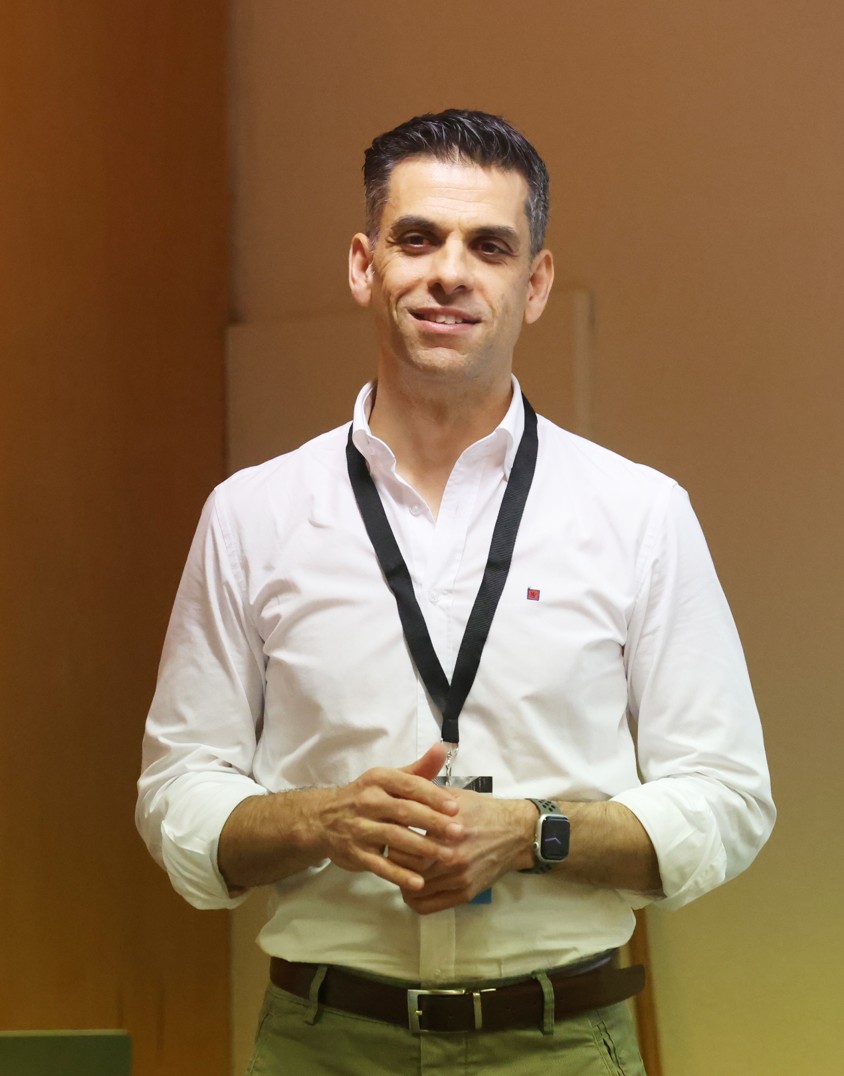
Miguel Barreto Santos - Polytechnic University of Leiria
Miguel Barreto Santos is a Professor at the Department of Civil Engineering - Polytechnic University of Leiria and is currently Coordinator of the Degree in Civil Engineering. He lectures several units, mainly in the field of building construction, including “Energy Rehabilitation and Sustainable Construction”, “Building Physics” and “Environmental Comfort in Buildings”. He holds a PhD in Civil Engineering from the Instituto Superior Técnico (IST) of the University of Lisbon. He has participated in several Research and Development projects as well as providing services with private companies and public entities. His research interests are Construction Sustainability and the Digitalization of the Construction. He is co-author of several publications in scientific journals and at national and international meetings.